
People perform their best and feel their best when they know they’re part of a community. This is true in almost any setting—AA, drama clubs, team sports, even fictional secret societies—but it’s especially true in fitness. In fitness, people can share in a brutal squat session, a tough conditioning circuit, or a demanding CrossFit workout. In short: being part of a fitness community makes you more likely to follow through, build perseverance, and keep going. You’re also more likely to see the results of your hard work. I’ve felt this firsthand from eight years with Cressey Sports Performance and my time at South Side Barbell, a powerlifting gym that used to be in Stratford, CT. When you train around like-minded people (or train with a purpose), great things happen.
CROSSFIT GETS ALL THE HYPE
There’s no denying the strong sense of camaraderie and community CrossFit has built among its fans and members. It has brought more people, especially women, into lifting. But there’s another fitness group that has done the same for years and is just as motivational for community—maybe even better in some ways. It’s a community I wish more people—especially women—would consider. Drum roll please… POWERLIFTING (BUT REALLY, STRENGTH TRAINING IN GENERAL)
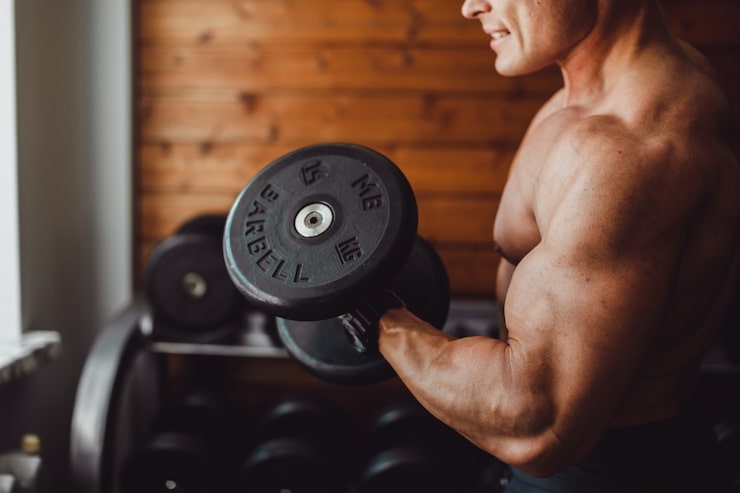
Fear not, ladies. The word “powerlifting” may feel intimidating, but it simply means strength training. You don’t need a fancy powerlifting gym to get stronger; you can do it anywhere. You just need some basic gym knowledge: what a set and rep are, the difference between a squat and a deadlift, and an understanding that “muscle confusion” isn’t a real concept. And if you recognize that this picture is of a dumbbell, you’re good to go.
WHY MORE WOMEN SHOULD POWERLIFT/STRENGTH TRAIN
Yes, there is a touch of intimidation when you first walk into a powerlifting gym. I felt it the first time I visited South Side Barbell with Eric Cressey in 2006. I had just moved to Connecticut and watched a room full of very strong lifters as I tried not to ruin my pants. Over weeks, I was welcomed, became part of the group, and realized it was one of the most giving and educational experiences in lifting, even if I didn’t compete. You don’t need to train at a powerlifting gym to strength train—you can do it anywhere. And those silly singlets are only for competition anyway.
1) COMMUNITY
The powerlifting community is generous and gives back, as long as you show up, work hard, and contribute as part of a team. When you’re around like-minded people, results tend to follow. CSP coach Tony Bonvechio started the CSP Women’s Powerlifting team, and I saw firsthand how empowering it was for the women who trained together, coached, and cheered each other on as they hit personal records. The community matters—seek out a gym or group, even if it’s just once a week. It’s worth it.
2) PURPOSE
Not everyone has easy access to a powerlifting facility or group, but you can still gain the benefits. Following a powerlifting- or strength-focused program gives you a purpose in training—a real goal. It helps you move away from judging progress by the scale or by magazine ideals. Powerlifting, like CrossFit, emphasizes performance-based goals, which often leads to long-term, steady progress. When a woman starts to see strength as a positive thing, many cosmetic goals fall into place as she gains new strength and confidence.
3) TECHNIQUE
You might wonder why not just do CrossFit. CrossFit can be great, with many coaches and programs that ramp up properly. But that’s not always the norm. The core value of powerlifting is learning technique—positioning, bracing, and moving well—to reduce extra movement from joints that shouldn’t be involved. This helps lower the risk of problems down the road. Powerlifting principles help you build skill in the big three lifts and make learning new movements less daunting. You learn to coach yourself.
UNAPOLOGETICALLY POWERFUL
Jennifer Blake and Jen Sinkler offer a resource called Unapologetically Powerful to help women see the power of powerlifting. It includes a 12-week training manual for beginners and early intermediates, guidance for first-time competitors, an exercise glossary with clear cues and images, a large library of demonstration videos, and a version of Lift Weights Faster tailored for powerlifters. It’s on sale for a limited time.
