
I recently had an interesting chat with my good friend and fellow strength coach, Ben Bruno. We catch up now and then to talk about our shared loves—like JP Licks ice cream—and to swap notes on training and fitness.
Ben is from New England, spent several years coaching at Mike Boyle Strength and Conditioning, and moved to Los Angeles last fall for a change of pace and new opportunities. His current client roster in LA reads like a Who’s Who of Hollywood—A-listers and others with a strong emphasis on aesthetics. Yet a part of him still loves Boston, where he used to work with athletes and help people get stronger.
In one of our recent conversations he pointed out a clear contrast in training mindsets between the West Coast and the East Coast, though there’s more context to consider. At places like Cressey Sports Performance, a 400-plus pound deadlift is hardly remarkable; in LA, hitting that same lift in a commercial gym can lead to assumptions that you’re on steroids, or even that you’re on a reality show.
There’s also a difference in how female training is approached, especially among female celebrities and the Hollywood crowd, where barbell training can feel taboo. Ben noted that when he tries to get some of his female clients to train with free weights, they’re sometimes hesitant to load the bar. The trend is slowly turning in a positive direction—more women are reaping the benefits of strength training (think CrossFit, among other things)—but the vibe that barbells are scary is still there, just a bit quieter.
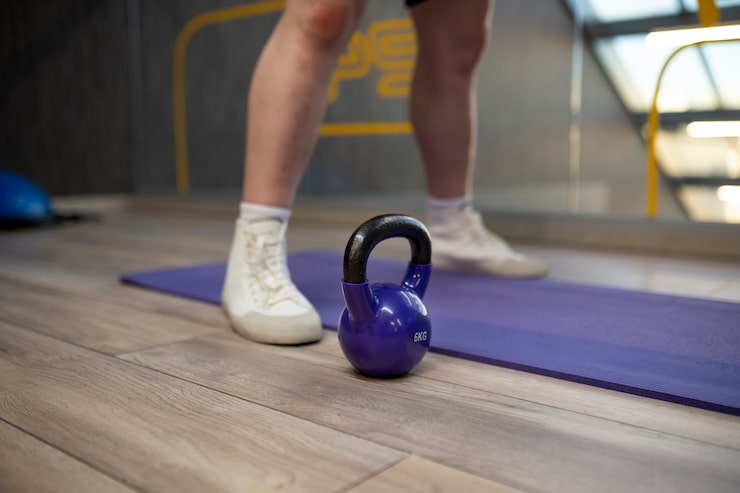
Strangely, though, when his female clients switch to kettlebells they’re eager to train hard. It often seems they don’t view kettlebell work as “real” strength training. They’ll squat, deadlift, push, pull, swing, carry, or otherwise move heavy with kettlebells, and they push hard. I’ve seen the same with my own female clients: with barbell deadlifts they may hesitate, but with kettlebell work they dive in and lift heavy.
Kettlebells tend to be less intimidating for some people (including men) and can be more practical than barbells in certain situations. They’re a great option for quick, efficient home workouts, don’t take up much space, and offer versatility and user-friendliness.
And here’s a takeaway many people overlook: the kettlebell can actually help improve your barbell deadlift. In fact, the kettlebell swing can boost your deadlift performance. But to get the most out of it, you need solid technique.
Two go-to sources I rely on for proper swing technique are:
– Artemis Scantalides and Eric Gahan from Iron Body Studios
– Neghar Fonooni
If you watch both, you’ll see they coach and cue the swing in a very similar way. With that in mind, here’s how the kettlebell swing can aid your deadlift:
1) It’s all about the hip hinge, not a squat swing
The biggest mistake is treating the swing as a squat-like movement. Done correctly, the swing trains a strong hip hinge, and the deadlift requires a rock-solid hip hinge too. Teaching your hips to push back and engaging the posterior chain (hamstrings and glutes) during the swing will carry over to the deadlift.
2) Keeping your body tight
Look at the setup for a kettlebell swing. The goal is to maintain upper-back tightness similar to a deadlift setup. Two simple cues help: pretend you’re squeezing an orange in your armpit to juice it, or imagine your shoulder blades in your back pockets. Both cues promote a stable spine and lat engagement, which is crucial for both the swing and the deadlift.
3) Maximal force production
The swing should feel like a hip snap, not a squat. It’s a powerful way to develop maximal force. As Artemis Scantalides explains, the correct force applied to a light kettlebell can make it feel much heavier, and the same idea scales to heavier kettlebells. If you don’t have a heavy deadlift weight available, a few sets of perfect kettlebell swings with maximum effort can still strengthen your deadlift.
Final thoughts: kettlebells have a lot of merit. They won’t replace barbells for big lifts, but they complement everything else and can help improve the deadlift. They’re also excellent for active recovery, conditioning, or a strong home-based program. If you’re looking for a solid kettlebell program, Lean & Lovely by Neghar Fonooni is a strong option. It’s geared toward women, but anyone can benefit from it. A 12-week plan with extra conditioning workouts, plus coaching insights, can be valuable for trainers and clients alike.
One last note about marketing: I’ve faced some pushback for recommending Lean & Lovely. I publish a lot of free content, and my blog has thousands of posts with only a small fraction promoting a program. When I say Lean & Lovely is a useful resource, I mean it sincerely and genuinely believe it can help people. If that’s not cool with you, I understand.
