
Two quick notes about the title today: it could pass for the title of the next big children’s book.
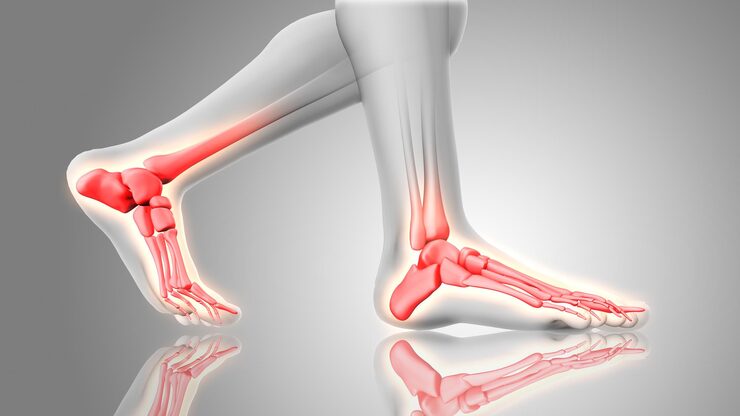
Looking for stock images of “big toe” pretty much made me feel sick, somewhere between things I’d rather not see—like painful kipping pull-ups and gonorrhea.
There’s a lot to think about when you talk about the squat, and a lot can go wrong with all the moving parts—hand position, stance, bar position, and so on.
People rarely consider the big toe when evaluating squat performance, but it’s actually pretty important.
Also, this is about as non-pukey a toe picture as I could find.
The Big Toe and the Squat
What sparked this post was a recent chat with a new client. During his initial evaluation, he showed me his squat because he’d said the movement has always bothered his lower back. He’d worked with trainers who tried to “fix” things with an overload of drills—stretching this, smashing that, a parade of positional breathing drills, and other over-corrective routines—sometimes to the point of absurdity. The next step, it seemed, would be an exorcist.
I didn’t do any of that. Instead I did something simple and revealing. I’d be surprised if I’m not nominated for a Nobel Prize for how revelatory it was. Ready? I watched him squat.
I’m puzzled as to why this obvious intervention is so often overlooked. A lot of it comes down to what John Rusin pointed out at SWIS 2018: we’re in an industry that chases bright, shiny objects. Watching someone squat is boring. Having someone float in a zero-gravity chamber while lasers try to release their psoas isn’t. We’ve become enthralled with gadgets, making it harder to trust what people already do well—coaching.
So I kept it old school and watched my guy squat. I had him take off his shoes and pants, and that’s when I noticed something: with every repetition, his toes lifted off the ground.
Was he cued to lift his toes? I’ll be blunt: no. He’d simply never been coached on how to squat properly. That’s why his back kept giving him the middle finger no matter which squat style he tried (goblet, front, back—he couldn’t escape it).
When your toes—especially the big toe—come off the ground, you lose your core.
What follows are the key takeaways for anyone who’s watching:
– When the toes rise, you lose canister position (ribs stacked on the pelvis) and with that, core stability.
– When the toes rise, you tend to crank into the lower back.
– Focus on foot pressure: distribute weight across the big toe, the ball of the foot, the little toe, and the heel.
– Cement the toes to the floor.
– Take your clients’ shoes off during squats to reveal what their feet are doing.
Some coaches do cue a different pattern—keeping the big toe up on the descent and then pressing it into the floor on the way up. Coaches like Mark Cheng and Cal Dietz do this with great athletes, and I’m not saying they’re wrong. I just find that, added to all the other cues in the squat, the “toes up on the way down, toes down on the way up” instruction can get crowded.
I prefer the foot-pressure cue, with three points of contact, and I keep the toes down as I squat. Drew Watts, a Lexington, Kentucky-based coach, agrees: “I don’t like digging; you don’t want to press the tip of the toe into the ground, but the pad of the toe—the big toe, the ball of the foot, the 5th metatarsal, the heel. Pressing the big toe helps the windlass mechanism as well.”
Jess Voyer, a strength coach from Essex, Vermont, demonstrates all of this in action (and she even joked that I’m a genius in her Instagram post).
All of this boils down to a simple takeaway: don’t be shy about taking off your client’s shoes. Watching what the toes do during a squat can tell you a lot. When the toes stay down, the core stays on and the squat often looks better.
I’m not dismissing other methods. I’m not anti-stretching, anti-mobility work, or anti-positional breathing. All those approaches have a place when matched to the right person and situation. We’re still cool, right? Maybe buy them dinner first.
