
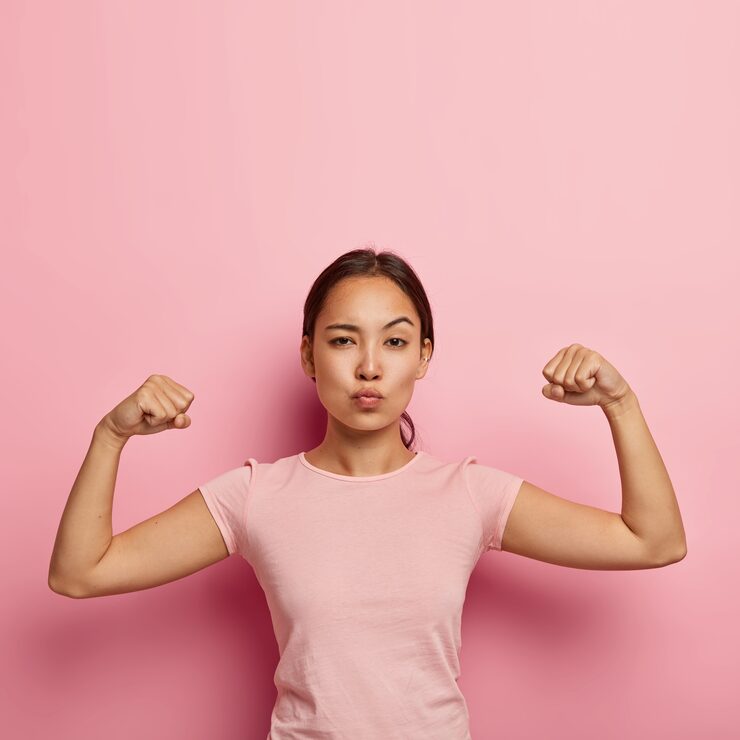
I almost titled this article “Why Women Should Strength Train,” and, in my usual playful style, joked that it’s “the shit.” But that would have felt lame for a few reasons: the title wouldn’t be clickbaity enough, and there’s little context. If you’re reading a blog whose tagline is “Because Heavy Things Won’t Lift Themselves,” you probably already get the point about strength training. You may already be on the “dark side” (best said with the same tone as Darth Vader from Empire Strikes Back).
Still, I hope the commentary that follows resonates with those who aren’t convinced yet, have preconceptions, or have been told that strength training isn’t for women. That idea saddens me deeply.
Note: If you found this site by accident while searching for terms like “adorable,” “World’s best hugger,” or “crazy cat gentleman,” welcome. I hope you stick around.
What Strength Training Is Not
Strength is subjective. A common problem is that some women feel they must lift heavy weights to be strong. That’s not true. Yes, being able to deadlift twice your body weight or perform ten bodyweight chin-ups is impressive and shows strength. But strength can show up in other ways as well. Have you ever watched Cirque du Soleil and seen the extreme positions those performers can hold? That’s also strength.
I’ve long worked to debunk the messaging the mainstream media often pushes to the masses—especially women—about strength training. The idea that strength training is for men and that women should focus on “toning” or “lengthening” or other phrases that have sounded unappealing is something I’ve fought against. Some of the quotes out there are ridiculous. For example: “No woman should lift a weight heavier than 3 lbs.” “I would never recommend kettlebells to women, even women who are fans of bulkier muscle lines. While bulkier muscle looks OK on women in their 20s and 30s, it doesn’t age well.” “It’s important to use lighter weights so we can target our deep, less angry, stabilizing muscles. Also, dipping your left hand into a bucket of unicorn tears detoxes the body of sadness.” One of the quotes above I made up. The point is to illustrate how off-base some messaging can be.
In general: for men the message tends to be about “building” or “getting stronger.” For women it tends to be about “to lessen,” “to slim,” or “to make smaller.” There’s nothing wrong with those goals if that’s what you want, but the overall message can be toxic and makes strength and strength training seem something to avoid for women. Strength does not equal bulk. Strength does not equal bad.
https://www.youtube.com/watch?v=1ytCEuuW2_A
It Needs to Stop
I could go on about how strength training for women helps athletic performance, increases muscle mass (which helps body composition since muscle takes up less space than fat), boosts resting metabolic rate, and reduces the risk of osteoporosis. All of these are wonderful benefits. Yet many women still stay away from the iron.
My good friend Ben Bruno trains many women and does a great job framing strength as something to embrace. He works with high-profile clients and has them doing impressive things that many women might hesitate to try because they’re unconventional and don’t involve a 106-degree room.
Kate Upton pushing 500+ lbs on the sled:
Chelsea Handler hip-thrusting some significant weight:
No pink dumbbells in sight.
Embrace Strength & Strength Training
1) Because I Said So
I don’t treat the women I train differently from the men I train, and I think they appreciate that. I’m a feminist. I don’t “baby” them, I don’t treat them like delicate snowflakes, I don’t have them perform “girl push-ups,” and I don’t feed into any notion that placing a barbell on their back will turn anyone into He-Man. I treat the women the same way I treat the men. CrossFit has helped move this mindset forward, and more women are ditching the elliptical for barbells. I’m not married to the barbell, though. Each client’s goals and abilities guide the path we take. Sometimes a bit of reverse psychology helps people see the benefits of strength training. The body can’t distinguish a barbell from a kettlebell, a dumbbell, or a resistance band—tension is tension. While there wasn’t any trickery in a video I referenced, I’ve had many female clients give me a glare when I tell them to lift a certain weight with a barbell, only to crush the same weight with a kettlebell or dumbbell. As a coach, it’s often best to meet people where they are. But it’s amazing when the shift happens and a client becomes more comfortable and confident with barbells.
2) Body Acceptance
It’s hard to say this better than Jen Sinkler did: “This weekend I was told by a man I knew in college that I was ‘unrecognizable’ now thanks to my ‘really big arms.’ I love how I look. I love the thickness. It’s one of the reasons I lift. My concept of beauty is different now. It involves more determination. No one gains muscle by doing nothing. It takes action, diligence, and a strong work ethic. Muscle represents those qualities, tells me about that person. Hard work is beautiful.” Another powerful quote from Fabienne Marier in response to Jen’s message: “I love that my body is now an ally, instead of being an adversary. My look is deliberate, not accidental. And it’s the result of striving to be more, instead of wanting to be less.”
3) Get Sh*t Done
Occasionally my wife is asked what she’s training for while she’s lifting. People assume she’s preparing for a competition. It’s a compliment, and she takes it as such. But how often is a man asked the same question? Not often. Lisa’s response is simple: “I’m training for life.” Boom. She’s strong. She gets things done—like moving heavy furniture or carrying groceries a few blocks.
4) Provides More Purpose and Intent
Strength training naturally leads to more performance-based goals, which I’m a big fan of. When a client says, “I want to lose ten pounds,” I dig deeper to understand why. Often, that goal is a default or a placeholder. Ladies, you’re not Microsoft Word. You’re capable of more. Focusing on performance goals—like a deadlift target or a set number of reps at a given weight—can shift both mindset and results. The hard work to reach those performance goals often makes the aesthetic goals fall into place. Strength training helps shape and contour the body. Endless treadmill time may help you lose weight, but it won’t necessarily make you stronger or more capable. If that’s what you want, fine—but chances are you want something more.
Yeah, strength training is the shit.
