
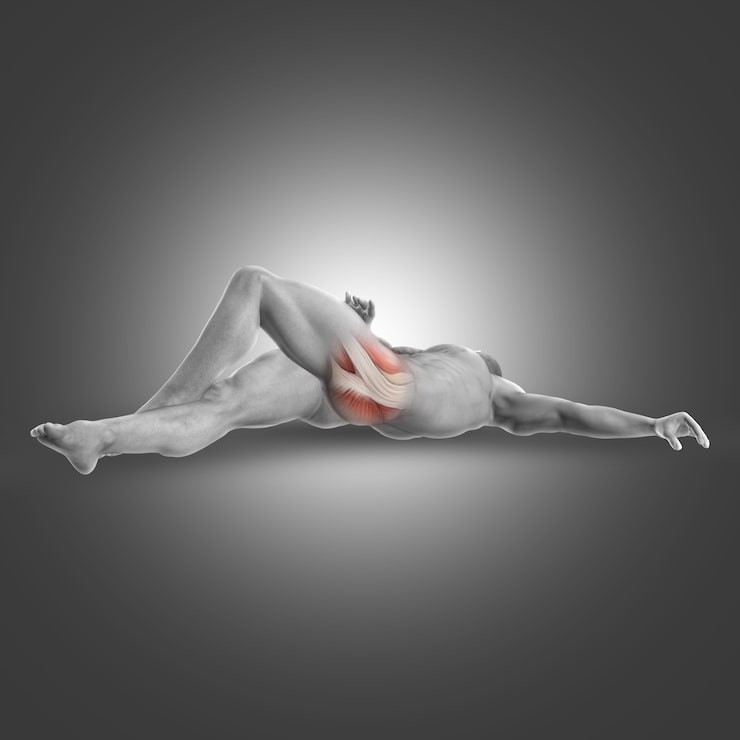
Part Two of Dr. Stare’s guest post on spinal health continues. After discussing the debate over bracing versus hollowing the spine and why focusing on a single muscle is limited, the article emphasized improving position sense (lumbopelvic proprioception) and explained why imagining movements has limited or negative value in diagnosing and treating low back pain. This section offers insight into whether spinal flexion and rotation are harmful and provides tips for preventing and treating back issues.
Are spinal flexion and rotation bad or not? What matters is context.
Flexion and rotation aren’t inherently dangerous. They’re fine in moderation, but doing them repeatedly without breaks, at high speeds, with heavy loads held away from the body, or for long durations increases risk. Under normal conditions, healthy spines cope, but most people do not have perfectly healthy spines. Many have subjected their spines to years of abuse, which makes rotation and flexion riskier, especially under the described conditions. In acute pain, rotation and flexion feel even more problematic. While some conditions (like extension-sensitive spondylolisthesis or stenosis) may tolerate flexion, most people with disc issues should heed the cautions above. As with most things, the right approach depends on the individual context.
What about athletes or active people who want to stay healthy and pain-free? Should they avoid movements that involve flexion and rotation?
The best answer is to weigh benefits against risks. Clinicians who work with high-level athletes have often reduced flexion- and rotation-based exercises in favor of anti-flexion and anti-rotation work, or by emphasizing full-body rotation that uses the hips and thoracic spine rather than the lumbar spine. This approach makes biomechanical sense because the lumbar tissues are prone to failure during flexion and rotation, and many sports require limited spinal rotation or flexion. The outcomes support this method. For example, pitchers often rely on heavy compound lifts with careful attention to shoulder and core mechanics.
Biomechanical data on the lumbar disc and rotation show that lumbar annular fibers can stretch about 4% of their resting length before tearing; once they fail, the facet joints become the next constraint. Repeatedly banging facets can cause joint damage and fractures, contributing to conditions like spondylolysis and spondylolisthesis. The maximum lengthening tolerance of the annular fibers occurs at roughly 3 degrees of segmental rotation per level; with five lumbar segments, that’s about 15 degrees total. That’s not a lot, so it’s wise to move rotation to areas better suited for it—namely the hips and thoracic spine.
Given how much many people have already taxed their spines from sitting and other activities, the practical approach is to minimize spinal flexion and rotation during training. Many patients with herniated discs or other back issues share this view.
What should you do to prevent back issues?
The goal is to reduce the likelihood of back problems while staying active. Practical steps include:
– Don’t sit in one position for long periods. Avoid sitting more than about 15 minutes without a position change, and try not to sit more than 30 minutes without getting up. Aim for no more than seven hours of sitting per day, including driving.
– When lifting, keep the object close to your body. Good spine position matters, but it’s not helpful if the load is far away.
– Don’t stay in any position without moving every few minutes, especially if you’re away from a neutral spine.
– Learn to recognize warning signs. Distinguishing muscle from joint issues isn’t easy. If fatigue sets in, don’t panic—reduce intensity and frequency and investigate the cause. Identify and change the trigger.
– Improve spine proprioception. Practice anterior and posterior tilting to find neutral spine from easy positions (like hook-lying), palpate to verify, and challenge it with arm and leg movements. Progress to quadruped and standing. This often requires a skilled coach to help you develop better motor patterns. There’s also value in using feedback techniques to teach proprioception.
– Have a qualified strength coach design a conditioning program. Focus on trunk endurance, powerful hips, scapular control, and avoiding high-risk moves.
What should you do to treat back issues?
No responsible clinician can prescribe a one-size-fits-all fix in a short article, but some general principles can guide effective care:
– See a professional who specializes in backs promptly. A physical therapist can save time, reduce frustration, and help rule out serious red flags that require non-conservative care. Early care often leads to faster recovery and lower costs.
– Spend time investigating why the pain started. The patient often has the answer; the clinician helps uncover it. Key questions include what makes the pain worse, what activities would provoke it, what activities alleviate it, and how recent life changes (work, moving, weather, workouts) may have contributed. Modifying these factors helps prevent recurrence.
– Stay as active as possible. Movement aids diagnosis and healing, prevents fear-avoidance, supports mental well-being, and influences pain physiology. If this feels overwhelming, work with a capable clinician or coach to guide you.
I hope this broadens your understanding of low back pain and helps you prevent and treat back problems while pursuing your performance goals. If you have questions, I’m glad to help.
Author bio (summary)
Dr. Stare is the Director and Co-owner of Spectrum Fitness Consulting, LLC, in Beverly, MA, where he trains clients across fitness levels for weight loss, health, and performance. He holds degrees in kinesiology and physical therapy, and a Doctorate of Physical Therapy. He is a Fellow of the American Academy of Orthopedic Manual Physical Therapists and works with Orthopaedics Plus in Beverly. He lectures nationally on lumbar spine treatment and prevention and offers seminars on weight loss, performance, and rehabilitation. He is CSCS-certified and a Board-Certified Nutritionist, with over 15 years of experience. He resides in Windham, NH with his wife and three daughters. For more information, visit spectrumfit.net.
