
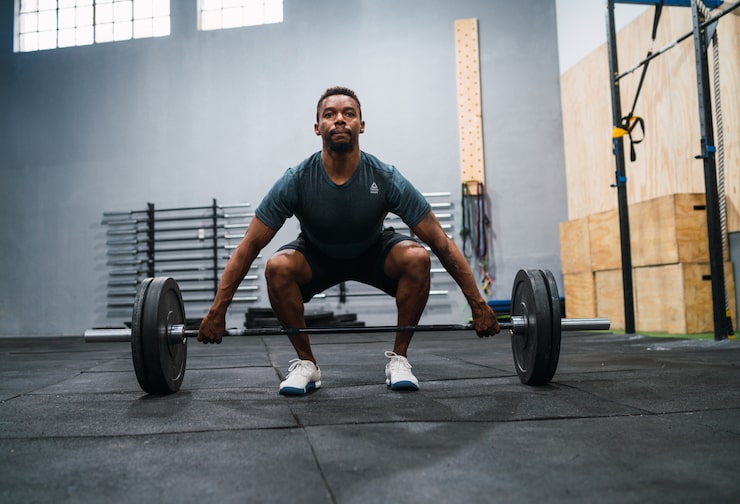
“Home base” for most lifters can and should be the trap-bar deadlift.
I once coached at Cressey Sports Performance when a fellow trainer asked what I thought about using the trap bar. He noted that almost everyone there deadlifts with the trap bar. I said we don’t feel most people need to use a straight bar. It’s a risk-reward choice, and often the risk outweighs any ego reward.
He asked if I thought we were causing dysfunction or cheating by sticking to the trap bar. I kept my cool, though I had to work hard not to roll my eyes.
Do I think I’m causing dysfunction? The trap-bar deadlift can be safer and easier to learn because it improves mechanics: your center of mass sits closer to the bar and your hips move in a better position. A deadlift is a deadlift as long as you hinge at the hips, keep a neutral spine, and lift from a true stopping point. It doesn’t matter if you use a barbell, a trap bar, or another implement.
My job as a coach is to match the exercise to the individual’s injury history, ability level, and goals. More often than not, the trap bar is the best option for both performance and safety.
Do I think they’re cheating? No. Unless you’re aiming to be a competitive powerlifter, you don’t have to use a straight bar. It’s not cheating. Traditionalists can stay in the past.
