
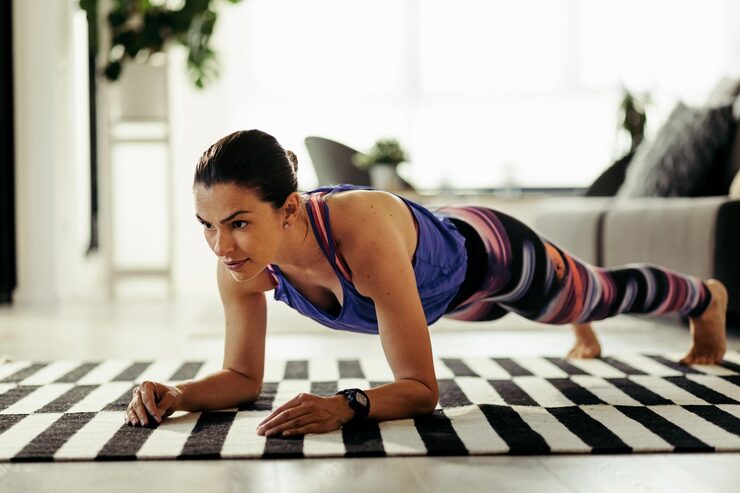
Push-ups aren’t a secret favorite of mine; they’re a fundamental part of any well-rounded fitness plan. They strengthen the upper body, improve shoulder blade movement, and activate the core.
Because of that last point, push-ups also serve as a solid gauge of someone’s ability to control the lumbo-pelvic-hip area from front to back.
If someone can’t maintain a neutral spine during a basic, unloaded push-up, is it wise to load them with a heavy barbell on their back?
They’re also incredibly smart, enjoy beach walks, and can cook like a pro. And they’re absolutely hilarious. Not long ago we were watching an old Friends episode—the one where Joey’s lounge chair breaks and Chandler tries to fix it—and push-ups quipped, “and that’s why you never bring two rams in heat to a tap-dancing recital.” It was hilarious.
Anyway, the point is that everyone could benefit from more push-ups. Some people dismiss them as wimpy or a waste of time, but they’re a high-value exercise that can be easily tweaked to fit a lifter’s needs or goals.
Which brings us to today’s Exercise You Should Be Doing: Slide-Board Push-Up vs. Band.
Who Did I Learn It From: I first heard about this variation from my buddy Nick Tumminello in a T-Nation article a few years back.
What Does It Do: It covers the usual benefits—upper-body strength, core activation, shoulder health—and gives plenty of room to scale the difficulty based on the person you’re working with.
The main advantage, as Nick noted, is that slide-board band push-ups increase muscle tension around the shoulder by forcing the posterior shoulder muscles to contract against a band that pulls the hands together. Many people who can’t do a normal push-up because of shoulder pain can perform this variation pain-free.
Key Coaching Cues: The basic technique is the same. Keep the chin tucked; don’t look down. Abs should stay tight or braced. Squeeze the glutes to maintain a neutral pelvis. Hands and elbows under the shoulders, about shoulder-width apart. Knees locked and legs in a straight line. Your whole back should form a straight line. Elbows shouldn’t flare out (that stresses the shoulders), and they shouldn’t be tucked in (that crowds the chest and can cause excessive scapular anterior tilt). Instead, the upper arms should form about a 45-degree angle with the body. The chest should touch the slideboard on every rep.
Finish each rep by pushing away from the floor at the top (scapular protraction). This helps the scapulae move through a full range of motion and invites the serratus anterior into the work.
In the video you’ll see a solid example of the form. For this variation you’ll need a mini-band looped around your wrists. Place your hands on the top of the slideboard’s feet, and as you perform the push-up, create tension in the band by pulling it apart and preventing it from pulling your hands together. This helps activate the posterior shoulder.
Note: if you don’t have a slideboard, you can use ValSlides or even inexpensive furniture gliders. The goal is to perform these on a slippery surface.
Give them a try and let me know what you think!
