
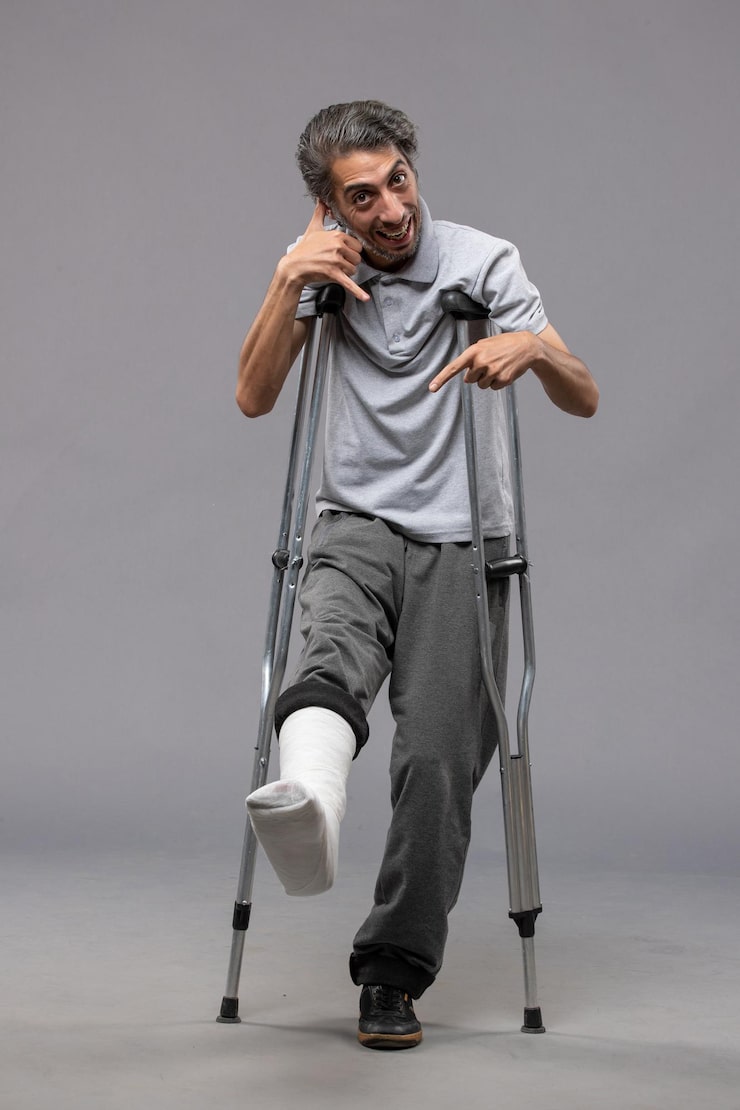
Today’s guest post comes from a former distance coach of mine, Australian strength coach Shannan Maciejewski. Shannan started working with me as he was coming back from a fairly serious ankle injury, helping him navigate the program design process as he worked back to playing competitive rugby.
On a lighter note, I once briefly played football. I tried out in seventh grade and lasted a week. After getting knocked around for five straight days, I handed in my helmet and pads and decided I’d rather collect baseball cards and play wiffleball in the backyard.
Shannan offered to write a guest post, and he picked a theme that fits what I usually write about here: you’re hurt, but that doesn’t mean you can’t train. Learn to make lemonade out of lemons. Enjoy.
At 3:45 pm you receive a call from a client: I’m crunched at training last night and I can barely walk, so I have to cancel today’s 4 pm session.
A few thoughts go through your head. Is this just a cop-out? It’s lower-body day—would I push him to deadlift anyway?
Your reply: That’s okay, mate. Come in and I’ll tweak the session for you.
Being able to adjust on the fly or plan around injuries is a crucial part of a coach’s job. Tony has mentioned this before, and I want to shed more light on how to train smart while recovering or dealing with the rough patches life throws at you.
Like the example above, doing nothing isn’t usually the best option. Life will get in your way.
We all have days when energy is low or something else is off—my car breaks down, my knee hurts, I’m sniffly, I’m still sore from Monday, a doctor told me to rest, I’m tired, I slept oddly, my neck hurts, and so on. We can all relate, and each person is unique in what they present. That’s how programming should be approached.
For clarity, I’m not a physical therapist or a physio, and I don’t treat pain. I work with other professionals to get the best outcomes for everyone we work with. It’s important to understand what the actual injury or limitation is before tinkering with exercises. If in doubt, seek professional advice first and build from there. What I can do is shed light on how to train smart and program around injuries, with practical steps you can apply now to keep progressing.
Quick story of a client of mine: a debilitating, season-ending low back injury from over-arching and a sharp movement while throwing a football. Not exactly the same throw, but still amusing. At first, almost everything hurt—bending, leaning, twisting, running. Twelve months later, he’s 10 kg heavier, his broad jump and vertical jump have improved, deadlifting and squatting are pain-free, and he’s a dominant midfielder. He can cut, turn, jump, and sprint, with no restrictions.
Below I outline how I approached that client and how you can apply the same ideas to yourself and your injury.
Because, as Tony always says, you can always train around an injury. Always.
Whatever you do, it must be pain-free
If it hurts, don’t do it. It doesn’t matter if it’s the top exercise your specialist or guru says you should do. If it causes pain or discomfort, stop it now. There’s always a pain-free alternative. You might swap a deadlift for a barbell hip bridge if that’s what lets you train without pain and still gain.
If lunges hurt your knee, first try them with proper form. That alone can fix a lot. There’s plenty of good instruction on this site to revisit.
A lot of the time you can improve things by staying within a safe range or trying a regression. For example, you can work on a Low Co-Contraction Lunge with Anterior Pull to feel more control and keep your shin vertical. It’s a way to train without aggravating the knee, while still getting a quality glute and leg workout. Start with one hand on the Vastus Medialis (the teardrop muscle) and the other on your glute, lifting just a few centimeters. Move through a short range, stopping before full lockout to keep tension and reduce strain. Expect a burn and a deep stretch in the back leg—this helps reinforce the 90/90 hip position and gives immediate feedback on which muscles are working.
The point is: even a great exercise won’t help if it hurts you.
Focus on what you can do, not just what you can’t
It’s okay to acknowledge you can’t perform your usual heavy squats, deadlifts, or lunges for a while. Instead, list movements you can do that still create a training effect. This is exactly what I did after breaking my fibula and dislocating my ankle—write down pain-free movements and build from there.
If you can’t squat, deadlift, or lunge because of an injured or stiff ankle, you can still work your glutes and hamstrings with supine exercises. Start with upper body work and quadruped glute work, then progress to glute bridges, single-leg glute work, strap hip curls, and gradually move toward barbell glute bridges as ankle mobility returns. You can also use dumbbell pressing variations and plenty of push-up progressions while strengthening your back. Push-up variations that allow the scapula to move freely are an essential part of a complete program. You won’t derail progress by adding more push-ups if they feel good. In fact, they can help you feel better.
Don’t forget the other limb
There are times when one leg might be sidelined, but you can still train the other leg and the upper body. Injuries can be mentally draining, but training the uninjured side can help preserve strength and control, and it can carry over when you return to full training. Use single-side loading or offset loading where possible, and don’t neglect stretching—there are times when you need to ease off the front foot and let the back leg work more.
Hit the other half of your body hard
If you train four to six times a week and don’t want to miss sessions, adjust rather than skip. You still have 80–90% of your body to train. Keep the habit alive. Add in an upper-body session, vary rep ranges, and even throw in some arms. If your ankle or knee is acting up and you can’t join team training, try battle rope conditioning to raise your heart rate without excessive joint stress.
Checklist to kick ass when injured and recovering
– When in doubt, seek professional advice to determine your injury or restriction.
– Focus on what you can do; what you can’t do is not the main issue.
– List pain-free movements you can perform. Think in terms of horizontal push/pull, vertical push/pull, squat, hinge, and isolation.
– Set goals for the next 2, 4, 8, 24, and 52 weeks, considering your recovery.
– Identify weaknesses or imbalances to address.
– Decide how many days per week you can train.
– Include exercises for the opposite limb to carry over to the injured side.
– Omit or tweak days you can’t perform, and add in pain-free conditioning if needed.
– Surround yourself with positive people and a strong support network.
– Stay positive and remember this is temporary; you’ll return to your normal routine when the time is right.
Being injured and recovering requires learning a new approach to training and daily life. A few small tweaks to your current plan can keep you on track, maintain some normality, and make you feel proactive rather than defeated.
If you have any questions, feel free to ask.
