
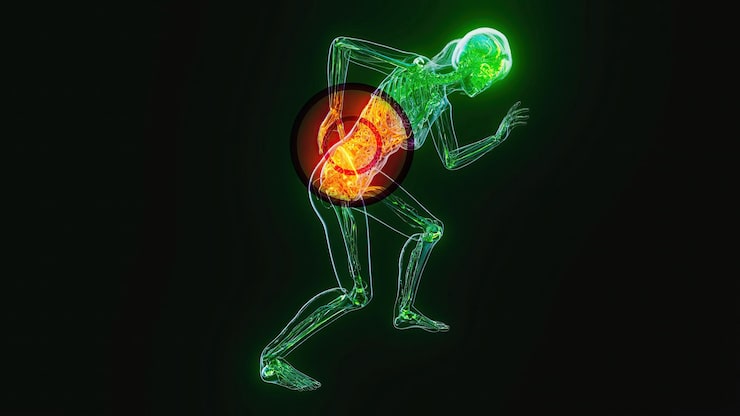
Low back pain is a common concern for people who push their bodies in training and sport. In this post I share perspectives from clinical experience and patient care about treating and preventing lumbar spine issues, with practical, evidence-based approaches that move beyond overused clichés.
Bracing versus drawing in
Since the late 1990s, researchers began noting subtle motor-control differences in people with low back pain, especially in how the core stabilizers respond before movement. This led to a popular takeaway that the transverse abdominis (TA) is the key stabilizer and should be activated with a hollowing maneuver. But that reinterpretation isn’t what the original studies showed, and later research hasn’t supported it as a standalone solution.
In fact, drawing in or hollowing can reduce spinal stability when used in isolation. Think of the core muscles as a team lifting a couch: if several teammates take a rest, the load falls on a few, increasing strain. A bracing approach—co-activating multiple stabilizers in anticipation of movement—helps the spine handle load more reliably. People with low back pain may show delayed activation not only of the TA but also of other important muscles like the spinal erectors, the quadratus lacorum, and the latissimus. Training to brace in advance of movement addresses this broader pattern and keeps all the stabilizers involved.
Lumbo-pelvic proprioception
Beyond muscle activation, how the spine and pelvis coordinate and sense position matters just as much. Proprioception—the body’s sense of where the lumbar region is in space—helps ensure forces are distributed safely. Activation matters, but it’s most effective when the joints are positioned to transfer loads properly.
The limited role of imaging
Imaging technologies, while powerful, have a mixed track record for low back pain. MRI often reveals findings in people without symptoms, and pain doesn’t always align with what imaging shows. Conversely, some people with pain have little to no pathological findings on imaging. Because of this, MRI is not reliably able to identify the source of pain or dictate treatment in most cases.
Imaging should be reserved for specific red flags, such as signs suggesting systemic disease (fever, unexplained weight loss, night pain) or a history of cancer; saddle anesthesia or progressive neurological deficits also warrant urgent evaluation. Otherwise, imaging can do more harm than good: it may expose patients to unnecessary radiation (with CT), contrast risks, and, importantly, it can lead to labeling incidental findings that don’t explain the pain and may steer care in unhelpful directions. Such labeling can increase anxiety and lead to less helpful outcomes.
A practical way forward is to focus on problem solving together with the patient: ask targeted questions, consider the natural history of low back pain, observe functional impairments, and address those impairments directly, rather than relying on imaging alone. This collaborative approach helps people take an active role in their recovery and reduces unnecessary dependence on diagnostic tests.
Look for Part 2, where we’ll discuss whether spinal flexion and rotation in training are harmful and offer more prevention and treatment strategies for spine issues.
