
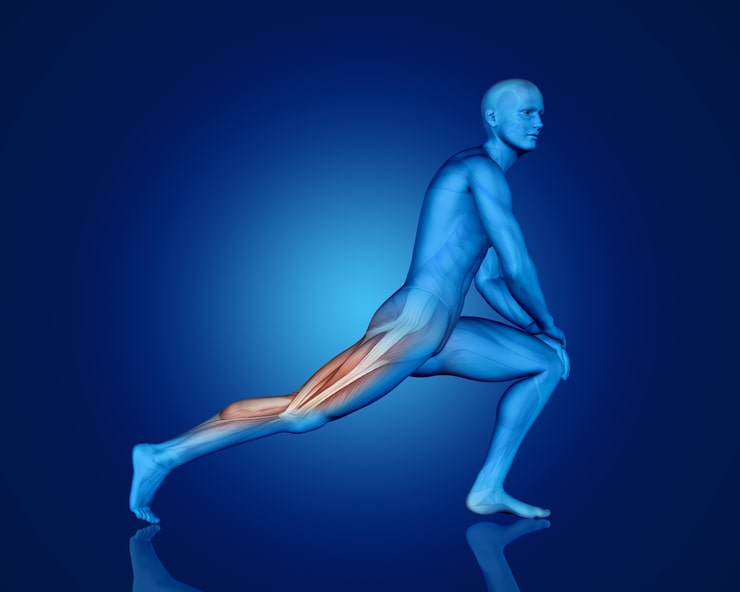
Back pain is tricky. It’s common and not fun, and there isn’t a single agreed-upon cause. Some people point to weak glutes, others to tight hip flexors or hamstrings, and some blame other factors. In my work as a trainer and strength coach, I’ve helped hundreds of athletes and clients dealing with low back pain. I assess the situation, propose a plan within my scope, and aim to get them moving again. Sometimes the solution is surprisingly simple: identify painful movements, avoid them, and find exercises that are tolerable or pain-free.
I can’t overlook Dr. Stuart McGill, a leading voice in spine research. He has written extensively on low-back pain, including Ultimate Back Fitness & Performance (now in its 6th edition) and Low Back Disorders. His book Back Mechanic is particularly user-friendly for understanding his approach to fixing back pain. Along the way, he’s become a familiar name in the field, and his work has influenced a generation of coaches.
In recent years, I’ve noticed a trend toward avoiding spinal flexion, sometimes at all costs. That mindset can backfire. We’ve coached people to know what spinal neutral feels like through prone planks, side planks, and birddogs, and to use strength training to reinforce that pattern. But some individuals later develop extension-based pain because they’ve lost the ability to move the spine into pain-free flexion. Others come in with pain during both flexion and extension. My job as the coach is to build confidence and start with movements that don’t hurt, then expand from there.
McGill’s go-to starting moves for someone with low-back pain are simple: the curl-up (not a sit-up), the side bridge (or side plank), and the bird-dog. Once those are mastered, I progress gradually with appropriate variations.
Two examples I use are the birddog with resistance bands and the birddog off a bench. The band adds kinesthetic feedback and helps the person feel what their core and glutes are doing in space. The bench version removes some stability, slowing the movement and teaching control. These variations help people learn how their spine and limbs move together without losing balance.
From an assessment standpoint, I often find that the spine doesn’t move as much as it should. Some people have been coached to avoid flexion so completely that their lower back stays flat when bending forward. A practical drill I use is toe touches to observe spinal curvature. Ideally the spine should show a natural curve; if the lumbar region stays stiff, that’s a red flag to address. The segmental Cat-Cow drill is another useful tool. It helps reveal whether different parts of the spine move well in a controlled, segmental manner. I guide clients through the movement step by step, two passes per set and three to four sets, focusing on slow, pain-free, intentional motion.
These ideas are starting points. In practice, I also incorporate unloaded rotational work and later introduce loaded movements, such as various deadlift and squat variations, hip and lower-back dissociation exercises, and a range of single-leg movements to build overall strength. The key message is that you should lift and move—both motor-control work and strength training have a place. There isn’t a single cause of back pain, and there isn’t a universal fix. While glute activation can be useful for some people to improve proprioception and coordination around the pelvis and spine, it’s not a universal explanation or cure. In short, a balanced, progressive approach that includes both technique work and lifting progressively is most effective.
