
Lifting Straps: Yes, No, Maybe So?
Staring at the barbell on the floor, I thought, “Holy crap—that’s a lot of weight.” It was 2004 in Albany, NY, at a Gold’s Gym, and I was visiting my sister after a breakup. I went to the gym to clear my head, not to do cardio. I decided it would be the day I deadlift 500 pounds for the first time.
I didn’t hit my first real deadlift until 2002, at 25, even though I’d been lifting since I was 13. I quickly fell in love with the lift: I was good at it, and I liked how it made my body look and feel. It didn’t take long to set my mind on pulling 500. It took a bit over a year.
Back then my approach was…contrarian. I didn’t do the classic 90 percent work and heavy singles. I stuck to sets of 3–5 reps, sometimes throwing in higher reps for variety. I believed you could improve your max by training with submaximal loads. I’d learned that building a wider base with submax loads helps you reach higher peak strength. I didn’t chase complicated periodization or change movements every few weeks. I mainly stuck with the conventional deadlift year round. And sometimes I used wrist straps.
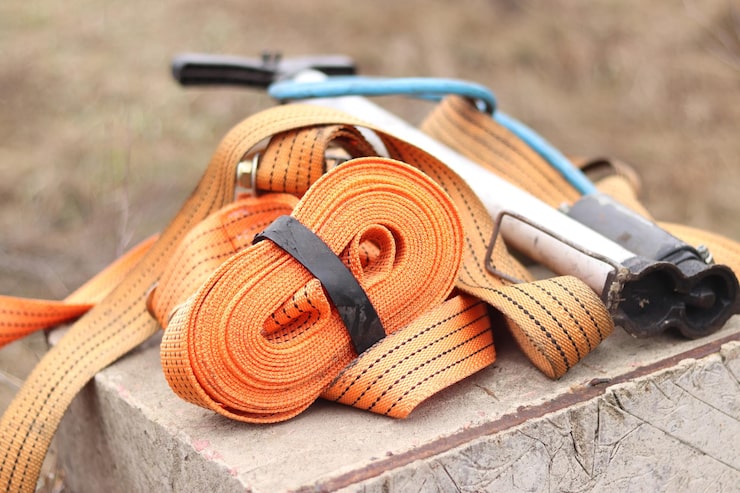
Yes, straps. I think straps have a place for most lifters. For beginners, they let you accumulate volume when grip is the limiting factor; for very strong lifters, they allow more total work before grip gives out. That brings up a common question I get: does a mixed grip cause imbalances or safety issues? And should you use straps at all?
First, it isn’t inherently bad or dangerous. Every exercise has some risk. Plenty of people have torn a bicep tendon while deadlifting with a mixed grip, usually on the supinated side, but many more pull safely with a mixed grip. In competitions, many lifters use mixed grip; some never do. A mixed grip lets you lift more by preventing the bar from rolling in your hands, and there’s also hook grip as another option. I’m not tough enough to use hook grip, but it works for those who do.
My general approach is this: warm-up and build-up sets with an overhand grip; then keep using the overhand grip for the working sets until grip becomes the limiting factor; once that point arrives, switch to a mixed grip and alternate grips with each set; for max effort, I’ll use my dominant grip, but alternating on the other sets helps offset imbalances and reduce injury risk.
As for straps, I don’t think using them makes you weak or a bad lifter. They’re useful for beginners and for those who need more volume. They helped me accumulate progressive overload early on, and I put on some kilos. But I knew straps can be a crutch, so I eventually aimed to lift without them. In competition, straps are generally not allowed, so training without them makes sense for most lifters. If you’ve had a bicep tendon or forearm injury or elbow pain, I’d advocate straps all the time.
Straps can slow you down, which some see as a drawback. A common setup mistake is spending too much time at the bottom—grip, dip, rip is the mindset.
Current note: I’m pulling in the 600s for doubles these days. Not too shabby for 46.
