
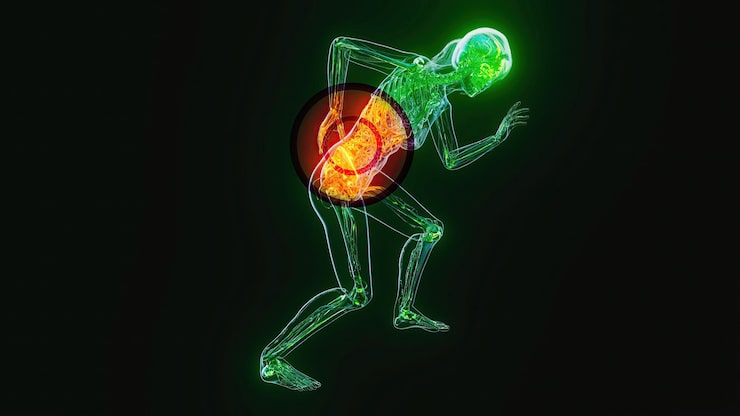
Let me be clear: I’m talking about muscles, not anything else.
The difference between good and bad stiffness
Tight or stiff muscles are often treated as a bad sign. They can raise the risk of injury when there’s a true length limit in a muscle, and they can promote flawed movement patterns throughout the body.
But injury isn’t inevitable. If you tested an NBA player with the Functional Movement Screen, especially the Active Straight Leg Raise test, you’d likely see some notable limitations and asymmetries. I’ve moved away from using the FMS in my client work after learning a lot from it years ago, though many trainers still use it and reference it here.
Many people would score around a 2 (an average) and show a noticeable right/left difference. That often leads to a flood of corrective exercises aimed at lengthening hamstrings. Ironically, in many NBA players, tight hamstrings help them jump as high as they do. In this context stiffness can be a good thing, and we don’t always need to “fix” it.
Note: the ASLR screen isn’t a pure hamstring-length test. It can give a sense of hamstring length, but more importantly it assesses the ability to flex and extend the hip. Stiff hamstrings can affect that, but the goal of the ASLR is to help people get into better positions and improve stiffness in other areas, so the nervous system doesn’t react with an unnecessary brake.
Core-engaged Active Straight Leg Raise: we train the anterior core to increase stiffness and promote a more posterior pelvic tilt, which helps reduce excessive stiffness in the lower back and improve hip-driven movement.
We also tend to move away from fixating on tight hip flexors. If you’ve been stretching your hip flexors for years without relief, the likely reason isn’t true tightness but protective tension. The “BS Hip Flexor Stretch” often ends up increasing stiffness where you don’t want it—in the lower back and hip capsule—making the root issue worse. Instead, aim for a true hip flexor stretch that builds good stiffness in the right places—the anterior core and glutes—and targets the real problem.
Another example is the lats. Stiff lats can be both good and bad. In overhead athletes and in the general population, tight lats can pull the shoulders down and contribute to shoulder and lower-back issues. Those familiar with Postural Restoration Institute ideas will recognize a pattern where the pelvis tilts forward while the diaphragm is pulled in another direction by rib flare and lumbar extension. This is not a stable position and keeps the nervous system on high alert.
For shoulder health, that means turning down the lats to allow better shoulder flexion, external rotation, and abduction, enabling the lower traps to work with the upper traps and serratus to help the scapula upward-rotate, tilt posteriorly, and protract.
Bench T-spine mobilization and wall lat stretch with thoracic spine extension and lift-off are examples of how we work on this.
When lats can fuel good stiffness, they become a major contributor to performance in the weight room. They help with heavy lifts and can improve your technique in the deadlift, for example. A practical cue is to wrap a resistance band around the bar and anchor it to something sturdy; that setup helps trainees learn to pull the bar toward them and keep the lats engaged throughout the set.
With this approach, stiffness isn’t necessarily a disaster. It’s about context. The bottom line is that whether stiffness is good or bad depends on where it’s occurring and how you use it.
