
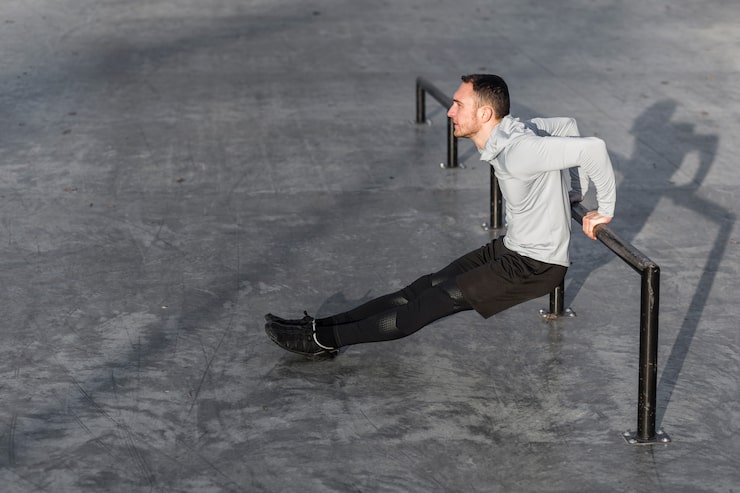
Single-leg training isn’t exactly something people brag about, but it’s important. It’s about as exciting as watching a NASCAR race or picking lint from your belly button. I know there’ll be eye rolls and yawns. “An article on single-leg training? What’s next, keto recipes?” I get it. But hear me out.
5 WAYS I INCLUDE SINGLE LEG TRAINING IN MY PROGRAMS
Single-leg training is serious business.
Often, articles on single-leg work come with a side of criticizing bilateral training (think squats and deadlifts). The message is that you should skip two-legged moves in favor of unilateral ones. That debate always feels silly to me—like choosing between low-bar and high-bar squats or mint chocolate chip vs. mint Oreo ice cream.
The truth is simple: it depends. Some people want brute force with the big three, so bilateral movements should be the backbone. Others, especially athletes, need a broad movement mix, which means single-leg work takes a bigger role. And yes, there are people who debate ice cream flavors—don’t be cray-cray.
My take: BOTH have a place. Both are important in a balanced program and should be used together. Convincing people to do squats and deadlifts isn’t hard; it’s a given. Getting folks to embrace single-leg work can be tougher, but it has many benefits, including:
– Joint health and overall integrity (almost everyone benefits from some single-leg work for knees, hips, and backs)
– Better balance
– Improved foot, ankle, and hip stability (and stability in general)
– A strong way to train rotary stability, which helps the core
– Greater sport-specific and real-life applicability
– Improved strength and hypertrophy, depending on how it’s programmed
– Addressing weaknesses and imbalances between limbs
– Reduced wear and tear from less axial loading
– More variety in exercises
Below are some ways I like to include single-leg training in my programs.
1) Treat single-leg training like eating broccoli
It’s one of those things that just has to be done. It’s hard to list all the benefits and skip single-leg work. It helps with athleticism, lifting, and overall resilience. The key is not to go too heavy too soon. I’ve seen people grab 80+ lb dumbbells for walking lunges and eyes roll back as they knee cave and lose control. That defeats the purpose. Use a load you can control and perform more reps with good form.
I also prefer a forward lean on lunges rather than staying too upright. A more upright stance can pull the lower back into an unstable position and cause rib flare. The guideline should be shoulders over knees, not shoulders over hips.
2) Potentiation (turning “stuff” on)
Have clients do a single-leg movement before squatting or deadlifting. Goblet variations are my go-to here (less grip-intensive): Goblet Reverse Lunge, Goblet Forward Lunge, Goblet Reverse-to-Forward Lunge, Goblet Split Squat, Goblet Bulgarian Split Squat, Goblet Whateverthefuck. The plan is to go light and own the movement. Do 2–3 sets of 6–8 reps per side. Light, controlled, and deliberate.
3) Adding isometric holds
Isometric holds can humble even strong athletes by slowing things down and forcing awareness of body position. They help with time under tension and better control.
4) Combo movements
Combine two movements to increase challenge and add variety. For example:
– Goblet Step-Through
– Rear Foot Elevated Kang Squat
5) Fake single-leg training
Some people aren’t ready for true unilateral work. “Fake” single-leg options can ramp people up safely. Two reliable options:
– Wall Press RDL: a supported single-leg hinge pattern, great for balance issues
– B-stance Squat: an offset stance that places more load on the front leg, also good for balance and stability until they’re ready for real one-legged squats
If you want more insight on this approach, look up Mike Boyle and the Lateral Sub-System.
I know I’m not covering every benefit, and my brain is running on fumes this morning, but this captures a solid approach. So, enough already. Let’s get people moving with smart, practical single-leg work.
