
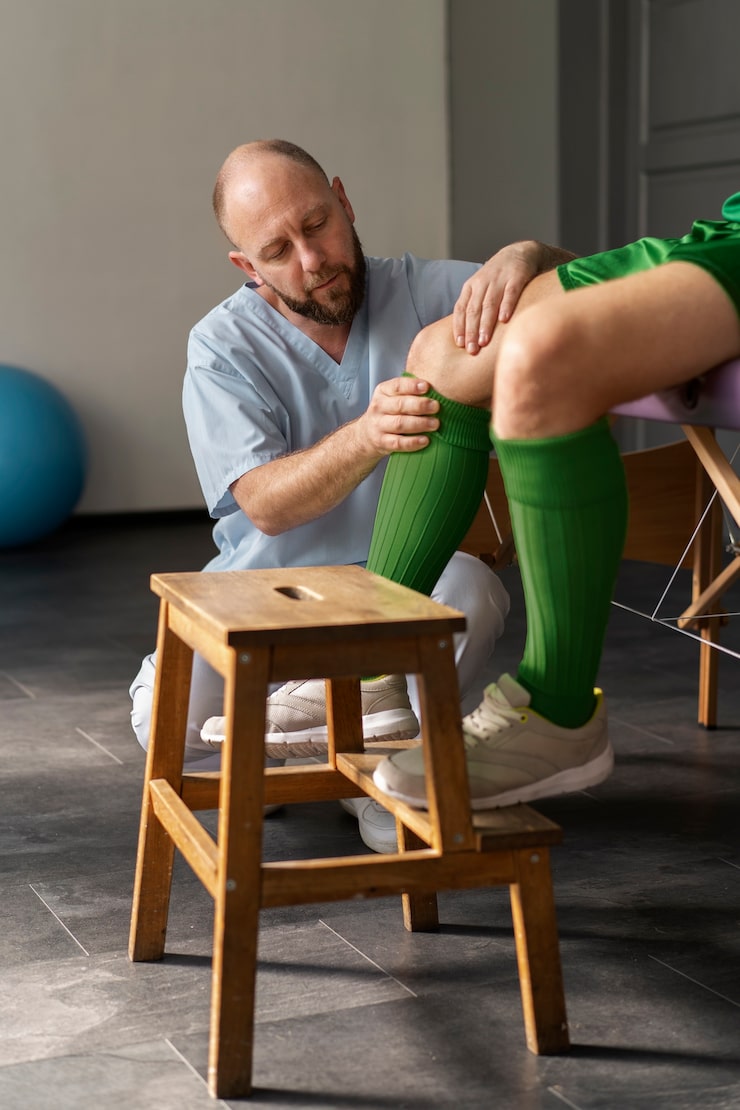
Let me share a client story that inspired this post. A client came in for a training session and admitted their knee wasn’t feeling well. With squats on the agenda that day, that wasn’t ideal news. Rather than cancel squats, I tried a simple intervention to relieve the symptoms.
Here’s a quick, practical knee fix. I’m not a wizard, but this approach has helped several clients who’ve dealt with cranky knees.
Notes:
I don’t earn affiliate income from recommending products. It’s common for knee health to be affected by the hip or ankle; the knee can be influenced by what happens elsewhere in the leg. When knee pain shows up, the lower leg is often overlooked. A key factor is whether the tibia can rotate relative to the femur. Poor tibial rotation can contribute to patellar tracking issues—sometimes more than a weak VMO.
If I had to list what actually affects patellar tracking, it would be: limited tibial rotation and tight IT band or adductors. There are other factors, but I’ll keep this brief for now.
I’ll cover this topic in more detail later, but for now, Dean Somerset and I will be in Athens, Greece this October for our Complete Shoulder & Hip Blueprint Workshop, where we discuss this and more. Details and registration are available, and if traveling isn’t possible, you can follow our digital course from home.
First, a caveat: for general knee pain I start with a technique audit and then adjust volume, load, and which exercise variation is used. Sometimes the fix is coaching to clean up form; other times it’s adjusting the lift slightly by reducing range of motion, widening stance, or changing foot position to make the lift more tolerable. I start there because it’s the easiest fix and it lets clients keep training without feeling like patients.
After that I address tissue quality—especially in the calves—a commonly neglected area. The gastrocnemius crosses both the ankle and knee, and improving its tissue quality can give immediate knee relief by helping the tibia rotate more during squats. It’s not fun, but it works. If you’ve assumed patellofemoral pain comes from a weak VMO, think again—the fiber directions can pull in a way that doesn’t greatly affect patellar tracking. Kudos to Dean Somerset for that insight.
