
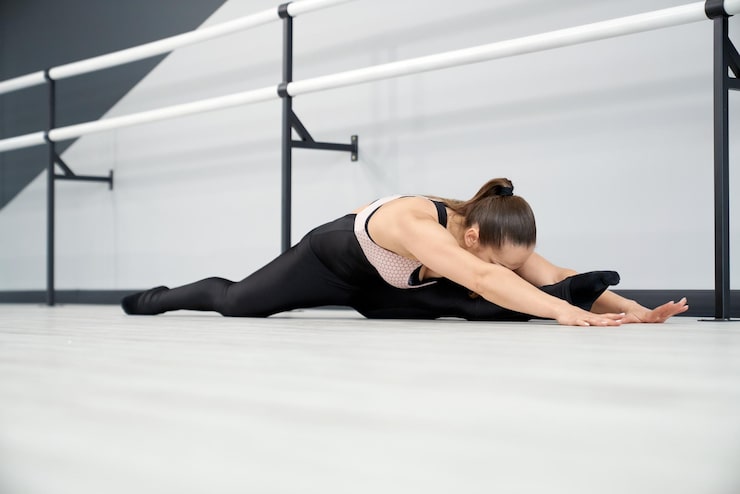
Does stretching improve performance?
Does the science on traditional stretching actually boost athletic performance? Many of us have assumed yes, but the evidence isn’t entirely clear. Before diving into the studies, here are the main arguments for and against.
Pros of stretching:
– It’s a common belief that stretching can lengthen tissue, store more energy, and help muscles stay healthy and perform better. We’ll focus on performance here, not injury prevention.
– Stretching can temporarily change the viscous properties of muscle fibers, reducing resistance and increasing available range of motion, though these changes may not last.
– It might improve fascicle length, which could affect how muscles are recruited.
– Stretching can aid recovery by activating the parasympathetic nervous system (rest-and-digest), potentially allowing harder training later if timed correctly.
– It can remove movement limits by increasing range of motion, which helps in actions requiring larger ranges, such as a deep squat before a vertical jump or the loading phase of throwing or swinging.
But stretching isn’t guaranteed to help.
Maybe stretching isn’t the magic pill (important, but not a panacea)
Angle of peak torque:
There are specific joint angles where training is most effective. For slower, strength-based tasks like bench press, squats, and deadlifts, a larger range of motion can generate more force. For high-velocity movements, smaller ranges are usually better. If you rely on quick, explosive actions, stretching may not offer much benefit, and many athletes already have the capacity to load and explode efficiently.
Movement specificity and limits of flexibility:
Most athletic movements don’t push toward an athlete’s maximum flexibility, and many tasks don’t require a lot of stretching to perform well.
Length–tension relationship:
A muscle has an optimal length for force production. Too little or too much stretch can reduce force, so stretching to force more motion into tissues might lessen performance when it’s time to act.
Note from TG:
This isn’t a broad attack on static stretching. Some studies have found that stretching before a vertical jump can affect performance, but doing a huge amount of stretching (10–15 minutes or more) isn’t ideal for performance. A few quick stretches are fine; a full yoga session right before a timed test is probably unnecessary.
This all sounds nice on paper, but what does the research actually say about stretching and performance?
Across studies, results are mixed. For power–speed tasks (jumping, sprinting, throwing), many studies show nonsignificant changes, with some small reductions. Overall, there’s a modest negative effect on performance, about 1.3%. For strength-based measures (1-RM, MVC), many studies show nonsignificant changes or reductions, with a larger overall negative effect around 4.8%. The longer the stretch between activity types (about 5 minutes on average for strength tasks vs 1.5 minutes for power–speed tasks), the greater the observed declines, which may help explain the bigger drops in strength-based activities.
Short-duration stretching (less than 60 seconds) across 26 studies and 38 measures tended to show mostly nonsignificant changes with a trivial overall change (~0.15% decline). Some studies did show improvements in jumping, sprinting, and cycling, but there’s no clear, consistent pattern.
Longer-duration stretching (60 seconds or more) across 28 studies and 44 measures showed mostly nonsignificant changes or reductions, with no improvements reported and an average drop of about 2.6%.
Zero nonsense stretching:
If you’d like more on this topic, check out Travis’s Zero Nonsense Stretching resource. You’ll find additional insights and his perspective there.
End note:
For more on the topic, you can also explore his website.
