
THE LOST ART OF (ADULT) PLAY
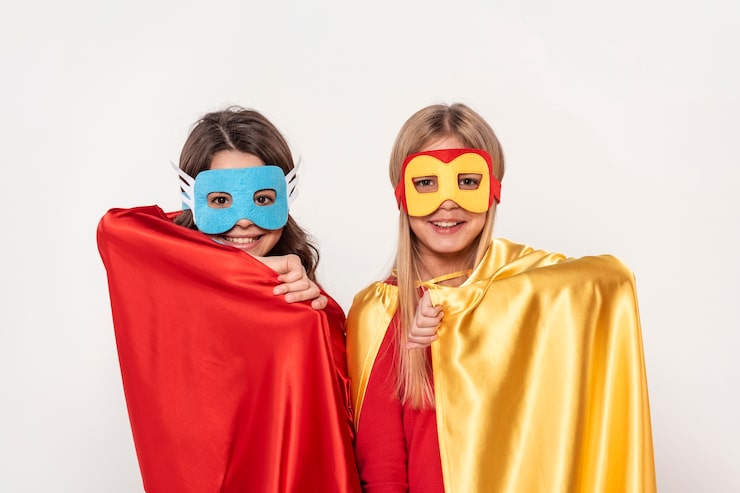
As a kid you were a blur of motion. One moment you were tugging your dad’s leg, the next you were chasing the dog around the house, tearing things up while your dad tried to figure out how you moved so fast. Like a flash, there was no stopping you. Then life got busy—age, jobs, kids, bills, a mortgage—and playtime shrank. Some people keep a little kid inside; others don’t. Where do you stand on the kid scale?
To stay in shape, you hit the gym with squats, presses, pulls, and curls, trying to keep up with younger folks and feel less like an old fart and more like a superhero, crushing your goals. Chasing childhood through exercise is fine, but acting like a kid all the time isn’t ideal. So keep tantrums in check. And maybe skip desserts before the main meal—wait, I’m projecting. Let me get back on track.
In early childhood you learned what you were capable of and what you could get away with through play.
WHAT IS PLAY?
Play is an activity done for its own sake, with no real goal beyond enjoyment. It’s flexible and often makes you smile, laugh, and have fun. The exact role of play in learning is debated. Some evidence supports its essential role, while other findings show it contributes to learning in meaningful ways.
WHAT HAS THIS GOT TO DO WITH YOU?
How does play help you now, as an adult trying to shed fat and beat personal records in the gym?
First, it gives you a break from the barbell. When you’re focused on the weight on the bar, other movements and cardio can be neglected. Playing can reveal weak points that hold you back. Second, it can help you push through a plateau and improve your coordination.
When you were a child, you did locomotor play—physical activity that trained your muscles for strength, endurance, and skill. Think of the local school or park playground with swings and monkey bars. Back then, play formed the neural and muscular basis of your coordination and growth. Returning to play can help you break through sticking points and make exercise more enjoyable. And when it’s enjoyable, you’re more likely to keep doing it.
Who’s up for crushing goals with a smile on your face?
If you said yes, start adding these ‘play’ drills into your routine (or on off days). The gym is a place where people aren’t watching every move, and many folks are busy taking Instagram selfies.
1. REACTION BALL DRILLS
Who doesn’t like playing with balls? The reaction ball makes you move without overthinking. Spot the ball, grab the ball, and you’ll end up performing squats, hinges, and many lunges almost by accident. It’s great for hand–eye coordination and adds a bit of chaos to a planned program.
2. AGILITY LADDER DRILLS
Some coaches dismiss the agility ladder, while others overemphasize it. There’s a middle ground. For the average person seeking variety, ladders raise heart rate and sweat while improving coordination, often without you noticing because you’re having fun.
3. FRIENDLY COMPETITION
Exercising with a partner boosts adherence. Use these drills with a friend and you’ll be sweating and smiling in no time.
4. STABILITY BALL WRESTLE
You and your partner try to knock each other off balance, while also building ankle stability, mobility, balance, and core stability.
Set Up – One foot on top of the ball with the knee bent at 90 degrees. Your partner puts the opposite foot on the ball, facing you.
Rules – Both push to knock the other off balance by rolling the ball with their feet. Do 30 seconds per foot as a warm-up, or turn it into a friendly competition. First to 5 or 10 points wins.
5. THE BOXER
This exercise builds power, muscular endurance, and hand–eye coordination. Set Up – Attach a resistance band to a solid anchor. Bring hands to shoulder level and keep the band tight. Your partner holds up their hands, palms open and facing forward. Rules – Hit the open palm, one hand at a time. Hands can move up, down, left, or right to increase the challenge. Do this for time (30 seconds) and record your hits, then try to beat it. The winner takes all.
WRAPPING UP
Exercise doesn’t have to be a grind. A little playful pause can refresh you and make workouts more enjoyable. And since you’re an adult now, you can have dessert before dinner. Knock yourself out.
ABOUT THE AUTHOR
Shane “Balance Guy” McLean is an ACE-certified personal trainer based in Louisiana, where he works deep in the heart of the state—with the gators.
REFERENCES
Learning Through Play PETER K SMITH, BA, PhD ANTHONY PELLEGRINI, PhD Goldsmiths, University of London, UNITED KINGDOM University of Minnesota, USA
Smith PK. Children’s play and its role in early development: A re-evaluation of the ‘Play Ethos’. In: Pellegrini AD, ed. Psychological Bases for Early education. New York, NY: John Wiley & Sons Ltd.; 1988: 207-226.
Byers JA, Walker C. Refining the motor training hypothesis for the evolution of play. American Naturalist 1995;146(1):25-40
