
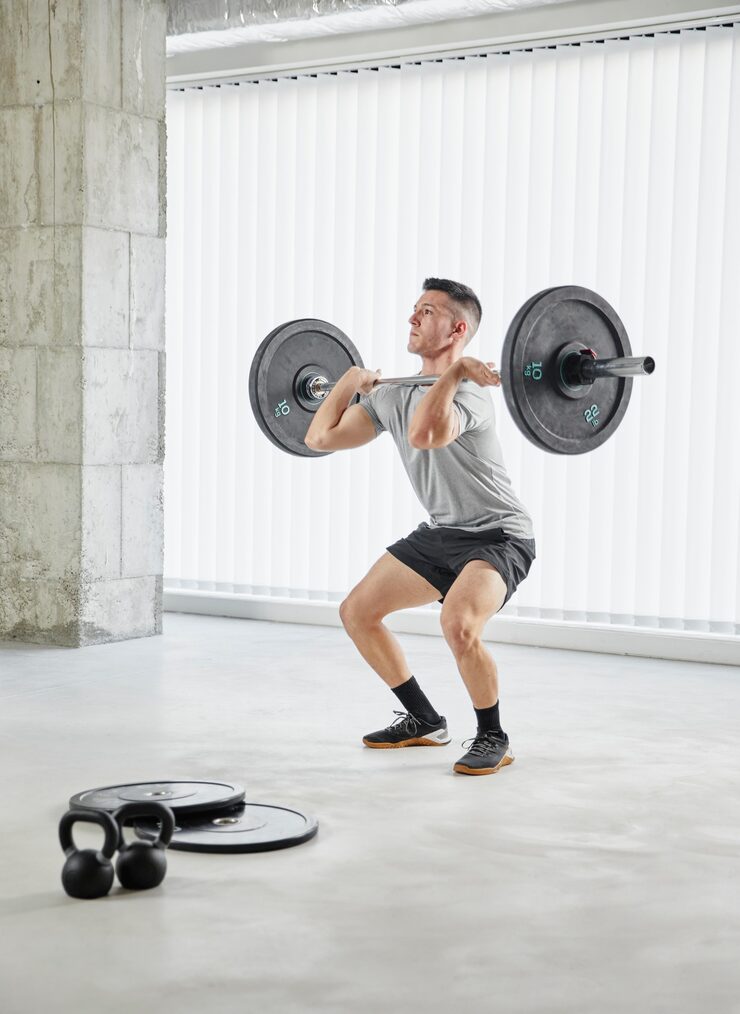
I’ve argued that there’s no such thing as textbook technique. The way we’re taught to perform certain exercises in textbooks often doesn’t translate to real life because we don’t live in textbooks. This theme comes up repeatedly in The Complete Trainers’ Toolbox. Sam Spinelli, one of the contributors, shared a preview from his presentation “All Things Squats, Knees, and Hips.” For the full presentation and contributions from eight other renowned industry leaders, more information is available at the resource.
INDIVIDUALIZING YOUR SQUAT STANCE
Humans are incredibly adaptable and diverse. Within that adaptability, we have developed a wide range of unique anatomical features that allow different movement from person to person. For a long time we didn’t acknowledge this and tried to fit people into square holes. The squat is a perfect example.
Traditionally, it has been recommended to squat with toes forward and hips about hip-width apart. Unfortunately, this approach excludes a large portion of people from squatting comfortably or to a meaningful depth. Some may achieve it with practice and improved range of motion, but for many it isn’t realistic due to their bone structure.
As we examine the ankle, knee, and hip, there is considerable variation in the bones and joints. For instance, the hip acetabulum depth can vary, affecting how much motion a femoral head can have. That in turn influences hip range between individuals, leading to different squat stances. When you add in other anatomical differences, you get a broad spectrum of squat styles.
HOW SHOULD I SQUAT THEN?
There isn’t a single stance that works for everyone—some people do well with a hip-width stance and a slight toe out, while others may prefer a narrower stance with feet straight ahead. Finding what works best for you can be challenging at first and may require some experimentation.
To help speed things up, try these four approaches:
1) Find your squat stance – standing
2) Find your squat stance – supported
3) Find your squat stance – seated
4) Find your squat stance – kneeling
The goal with each is to start with feet together and gradually widen your foot/knee distance. You’ll typically find one width that feels better than the others; stick with that for now. Then you can start tweaking foot/knee angles and continue experimenting. This will give you a solid head start on a squat stance that’s unique to you.
Two additional details: you may find your stance isn’t symmetrical and you may notice it changes over time. These things are normal for many people.
DID I JUST BLOW YOUR MIND?
This is just a taste of what I cover in my presentation “All Things Squats, Knees, and Hips” in The Complete Trainers’ Toolbox, an online resource that also features presentations from eight other industry professionals—including Tony Gentilcore, Dean Somerset, Dr. Lisa Lewis, Alex Kraszewski, Kellie Davis, Meghan Callaway, Dr. Sarah Duvall, and Luke Worthington.
It includes 17 hours of content covering a wide range of topics relevant to health and fitness professionals. It’s on sale this week at a significant discount, but only until Sunday, February 17th at midnight. For more information, visit the resource.
