
Being a good coach and writing effective training programs isn’t about stuffing the most demanding or flashiest exercises into athletes’ or clients’ routines.
If you browse social media, you’ll see fitness pros competing for attention with elaborate moves, from quasi-isometric deadlifts with chains (performed from a deficit on one leg) to flag holds with band abduction. I’m joking, but I’m not far off.
I don’t care about chasing likes with circus acts. When I watch coaches’ posts on IG or YouTube, I wonder:
– What’s the chance that only a small fraction of their audience can actually reproduce what they’re showing?
– How will that exercise help them?
I’m not trying to be a killjoy. Sometimes people just want to move for fun. Great—do it. It doesn’t always need a rigorous rationale or a quote to back it up.
But those who have an audience and share practical, actionable content have a responsibility to be practical with what they relay. Just my two cents. Excuse me while I step off my soapbox.
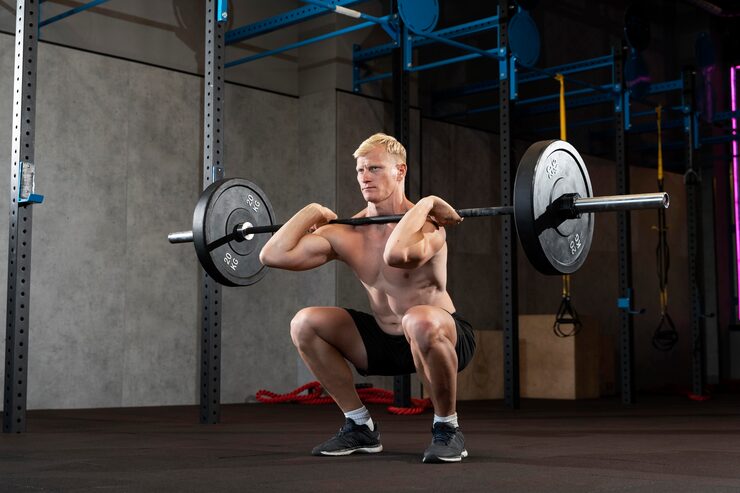
On that note, let’s talk about one of my favorites: the 2-KB front squat.
I’m not the only coach who likes this variation. Others such as Mike Robertson, Artemis Scantalides, Molly Galbraith, and many coaches affiliated with StrongFirst or RKC certification are fans too.
It’s one of my go-to squat variations for athletes and general population clients for several reasons:
1) It teaches full-body tension. The front placement of the load forces the core to fire and helps position the torso correctly—less rib flare and a stacked pelvis and rib cage over the pelvic floor and diaphragm. The abdominals resist an excessive arch. As a result, the torso tends to stay more upright, which helps reduce excessive spine shear. Note: forward lean isn’t inherently wrong in squatting, but for many beginners it’s more joint-friendly to stay upright, accumulate reps, and then progress to more forward-leaning variations.
2) It lets you load someone without crushing them. As Artemis Scantalides notes, the double kettlebell front squat lets you train with a lower load for the same physiological effect because of the kettlebells’ shape and rack position, helping you maintain squat strength through regular practice.
3) It humbles people. Even very strong lifters can find this variation challenging. Two 24 kg kettlebells can keep many athletes honest.
Below is a quick video I shot this morning that covers the setup, how to move the bells into the starting position, and basic cues. Hope it helps. Quick-n-dirty 2-KB Front Squat Tutorial.
Someday someone will post a video of juggling chainsaws on a BOSU ball. Wait for it.
